When you want your teeth straightened, you are going to need to make a real commitment to the entire process. You will need to first visit your dentist so you can both discuss all of the options available to you. You will then need to choose one of these options, which is going to include wearing some form of dental braces.
Commit to the treatment
It truly is essential that the patient commits to doing everything in his or her power to make sure that the entire process is going to work, which includes wearing orthodontic retainers. While the entire teeth straightening process tends to take anywhere from 12 to 24 months, it could take longer if a retainer is not worn.
Once we remove the braces, wearing an orthodontic retainer is the next crucial step in keeping the teeth straight. Patients must never underestimate the second part of the teeth straightening process since they must wear the retainer in order to receive the absolute best teeth straightening results.
Types of retainers
While there are a few different types of retainers available, the dentist is the one who will determine which type of retainer is going to work best for any particular patient.
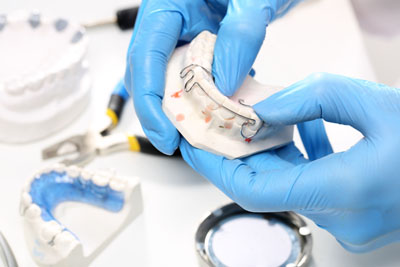
Removable Retainers- Also known as a traditional retainer, removable retainers can rest against the top part of the mouth so that the wire covers the front part of the teeth.
Permanent Retainers – Permanent retainers consist of a wire that we glue to the back side of the bottom teeth for a set amount of time in order to straighten them. We usually glue permanent retainers to the upper teeth because the bottom teeth can hit the wire.
Clear Overlay Retainers – Clear overlay retainers are similar to that of an Invisalign® aligner and are what we often use for dental patients who need a guard that will help protect the teeth if clenching or grinding is an issue.
Why orthodontic retainers are important
The reason why it is so very important to wear an orthodontic retainer after the initial teeth straightening process is completed is to help keep the teeth from shifting back into their original position. How long the patient will need to wear the retainer is going to be dependent on a few different factors, with most patients wearing them for a period of about two years.
While some dental patients may need to wear a retainer all the time, others may need to only wear it for a certain amount of hours or at night. If the possibility of the teeth slowly but surely going back to their original, crooked position is high, a retainer will be the most effective option for keeping the teeth straight.
Bottom line
Because orthodontic retainers are an essential part of the teeth straightening process, they must be worn according to the dentist instructions. While it may be tempting to not always wear the retainer if you choose not to, understand that the entire teeth straightening process will take longer.
If you have any questions about the teeth straightening process or about a specific orthodontic retainer, we invite you to contact us today so our expert staff can assist you.
Dental laminates offer a conservative way for those seeking to refine their smile's appearance. As modern dentistry continues to evolve, these ultra-thin restorations provide a minimally invasive alternative to complete smile rejuvenation without the extensive removal of healthy tooth structure. By addressing minor dental issues through a personalized treatment plan, you can achieve a natural-looking,…
An implant dentist replaces missing teeth with durable, natural-looking dental implants. Choosing the right provider is essential for long-term success, as implants require precise placement and proper integration with the jawbone. Patients seeking a permanent solution for tooth loss can benefit greatly from the expertise of an implant dentist. Understanding the advantages of specialized treatment…
When tooth loss occurs, simple tasks such as chewing and speaking may be difficult, and the appearance of a smile can be affected. An implant dentist uses dental implants to address these issues, as the restorations integrate directly with the jawbone, creating a long-lasting foundation for replacement teeth. The process not only restores the look…
Dental implants are a reliable way to replace missing teeth. They can improve how you eat and speak, as well as enhance the appearance of your smile. Choosing the right implant dentist ensures a successful treatment outcome. Here are five essential questions for an implant dentist during your initial consultation.Choosing the right dentist for implants…
 When you want your teeth straightened, you are going to need to make a real commitment to the entire process. You will need to first visit your dentist so you can both discuss all of the options available to you. You will then need to choose one of these options, which is going to include wearing some form of dental braces.