Teeth Straightening Solutions for an Improved Smile
If you are seriously considering a teeth straightening procedure, then you need to know all of the different options that are available for you to achieve this process. When you visit our orthodontics office in Dalton, you are taking the first step toward a perfectly straight and beautiful smile. However, you may find that there are more options and choices to choose from than you expected. As such, it is important for you to come in for an initial consultation where we can go over the amount of straightening you need, what your goals are, and then explain all the different options that you have for completing the process.
At this initial consultation, we are also going to be addressing a realistic timeline and expectations. One of the things that patients need to remember upon visiting us for teeth straightening. No matter which treatment option the patient chooses, it takes years for teeth to grow in incorrectly. Thus, it is going to take some time for proper alignment.
Fortunately, we have some of the best options available and can provide patients with a comprehensive service in order to make sure the teeth straightening goes according to plan. Keeping that in mind, here are two of the more common options that we use for teeth straightening.
Common teeth straightening options
Traditional Metal Braces
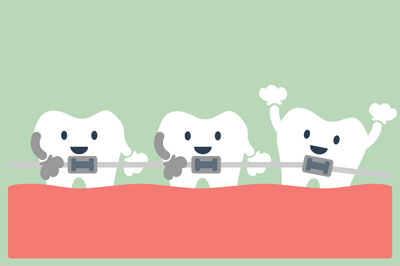
Traditional braces are the tried-and-true method for straightening teeth. The technology continues to improve, making traditional braces significantly smaller than the ones from 20 years ago. Traditional metal braces work by using metal brackets and wires. We secure the metal bracket in place and we then thread a thin metal wire through the back of the bracket using rubber bands.
These rubber bands slowly tighten the braces, ensuring that the patient's teeth move along a specific path in order to accomplish the straightening process in a specific amount of time. There are pros with having traditional braces for teeth straightening, including the fact that they are cost-effective.
Ceramic Braces
For patients who have a more discreet bend, there are ceramic braces. Ceramic braces are difficult for other to notice since they camouflage into the natural teeth. The way that we accomplish this camouflage is by placing ceramic brackets that match the shade of the patient's teeth. We also use ceramic to create fake teeth, so the braces are going to blend perfectly.
In addition, the wires also consist of a tooth-colored material that helps with the blending process. We do not recommend that patients use ceramic braces for children because of ceramic braces stain very easily. Patients cannot clean the stains unless they are willing to replace the entire ceramic piece. For adults who are interested in teeth straightening, ceramic braces may be a perfect option.
Call our dental office at (706) 425-6240 for more information.
We can explain your options in further detail during a consultation.
An implant dentist provides a long-term solution for missing teeth. They accomplish this through dental implants, which restore smiles by enhancing speech, chewing ability, and overall oral health while looking natural. By working with an implant dentist, patients can benefit from expert care that preserves jawbone health, protects surrounding teeth, and ensures lasting stability.An implant…
Dental implants are a long-term solution for missing teeth, but their longevity depends on proper care and professional maintenance. An implant dentist can help ensure dental implants remain in optimal condition for many years to come. Seeking an implant dentist’s care can help extend the life of your dental implants and preserve your oral health.Routine…
Dental laminates offer a conservative way for those seeking to refine their smile's appearance. As modern dentistry continues to evolve, these ultra-thin restorations provide a minimally invasive alternative to complete smile rejuvenation without the extensive removal of healthy tooth structure. By addressing minor dental issues through a personalized treatment plan, you can achieve a natural-looking,…
An implant dentist replaces missing teeth with durable, natural-looking dental implants. Choosing the right provider is essential for long-term success, as implants require precise placement and proper integration with the jawbone. Patients seeking a permanent solution for tooth loss can benefit greatly from the expertise of an implant dentist. Understanding the advantages of specialized treatment…
 If you are seriously considering a